
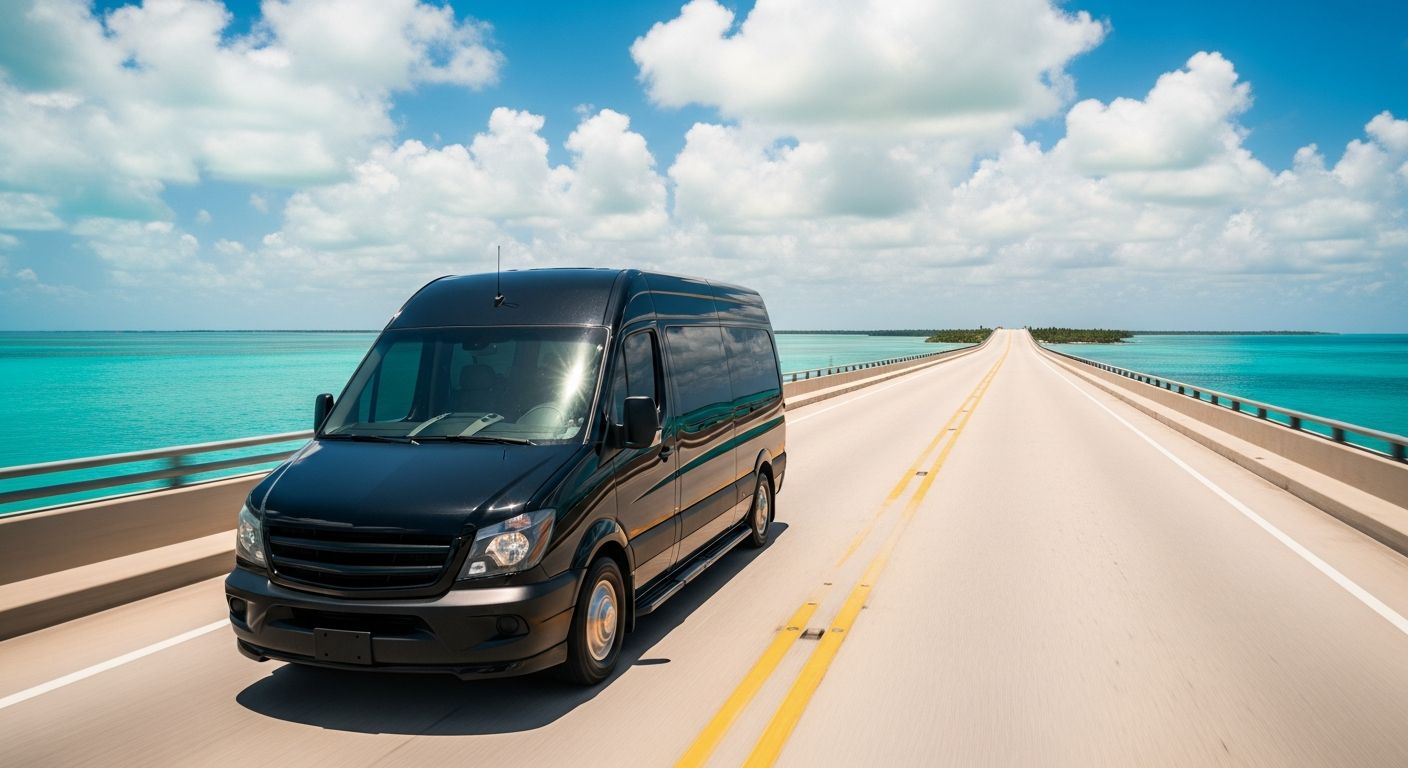
US-1 from Miami to Key West is one of the great drives in the United States. It is also the only road, which is the single most important fact about it.
How long it actually takes
Three and a half hours with clear roads and no stops. Four and a half is the realistic planning figure once you include a stop and normal traffic. On a holiday weekend, or if there is an incident anywhere along the chain, it can be considerably more — and because there is no alternative route, there is nothing anyone can do about it.
Plan on four and a half hours each way. If you arrive early, that is a bonus rather than a disappointment.
What the drive is like
The first hour, from Miami through Homestead and Key Largo, is the least interesting — suburbs, then a long straight stretch through the edge of the Everglades. Do not judge the trip by it.
From Islamorada onwards it becomes what you came for: water on both sides, low bridges hopping island to island, and a colour of turquoise that does not photograph accurately. The Seven Mile Bridge, around Marathon, is the centrepiece — seven miles of open water with the old bridge running alongside.
The last stretch into Key West is slower, with more traffic and lower limits as you reach the island.
Stops worth making
- Key Largo — the first of the Keys, and the diving capital. Good for a first coffee stop.
- Islamorada — the usual lunch stop, with waterfront restaurants and a proper Keys atmosphere.
- Marathon and the Seven Mile Bridge — the photograph everyone wants. There are pull-offs at both ends.
- Bahia Honda State Park — the best beach in the Keys, and worth an hour if you have one.
- Big Pine Key — home to the tiny Key deer. Speed limits drop sharply and are enforced.
Day trip or overnight?
As a day trip it is eight to nine hours of driving plus whatever time you spend in Key West. Leaving Miami at seven gets you there around eleven thirty; leaving Key West at five gets you back around nine thirty. It is a long day, and it is popular anyway.
Staying a night is better if you can. Key West in the evening, once the day-trippers and the cruise passengers have gone, is a completely different and much nicer place. We can run you down one day and collect you the next.
Driving yourself versus being driven
The honest case for driving yourself: it is cheaper for one or two people, and you have the car in Key West — though the island is small, walkable, and parking is genuinely difficult and expensive.
The case for being driven: this is a drive where the passenger seat is much better than the driver's seat. The views are on both sides, the bridges are the point, and the driver sees very little of it. For four or more people the cost difference narrows considerably, and nobody has to stay sober or alert for four hours in each direction.
Practical notes
- Fuel is more expensive the further down you go. Fill up before Key Largo.
- Mobile signal is patchy on the longer bridges.
- There are few places to turn around — miss a stop and it is a long way back.
- Hurricane season runs June to November. Evacuation orders close the road, and there is only the one road out.
 Related